

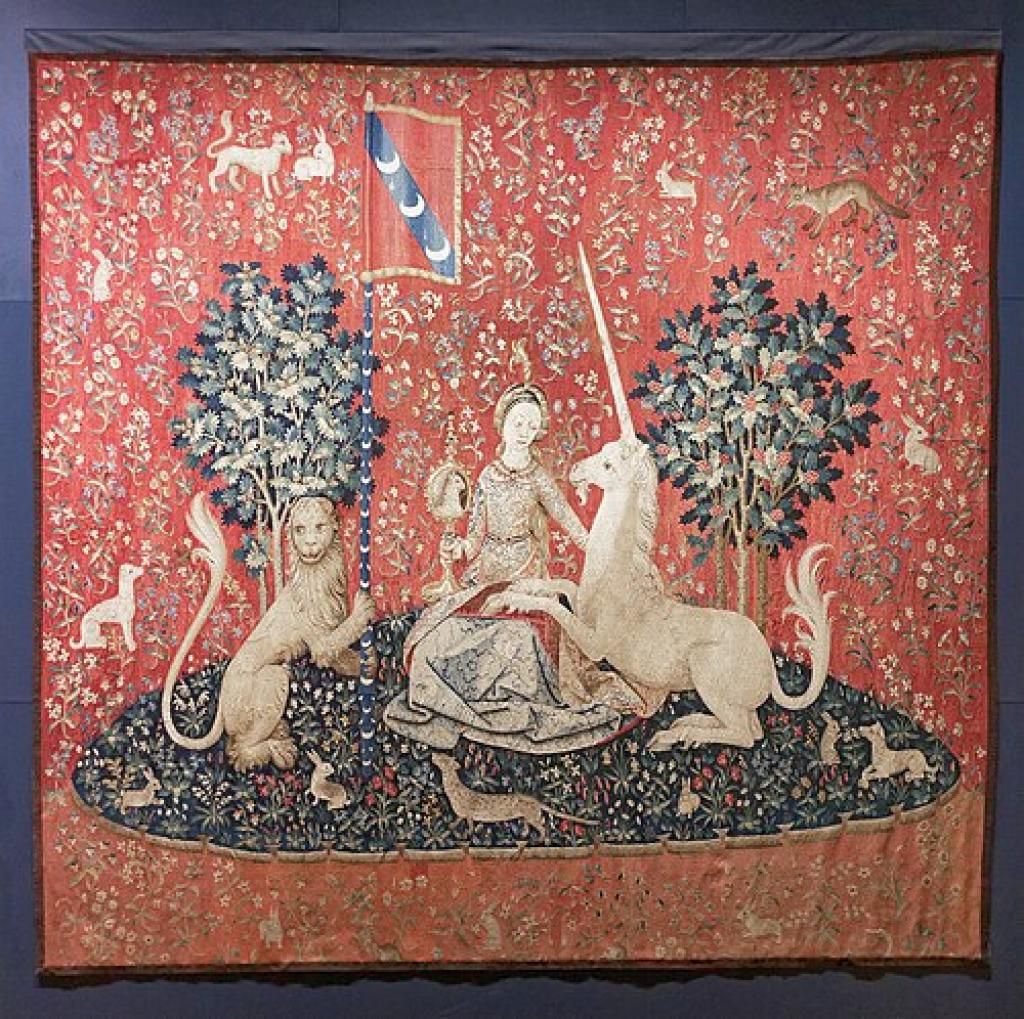
The Unicorn, Finally Revealed
The Musée de Cluny is dedicating a major exhibition to a creature that has captivated young and old alike for centuries. This imaginary animal has crossed so many eras without losing an ounce of its appeal. This spring, come find out why, the discovery is far more surprising than you might expect.
A Thousand Years of Belief
What makes the unicorn so fascinating is precisely that it never needed to exist to leave its mark on history.
Marco Polo claimed to have encountered one on his travels. Greek naturalists described it with the same rigour they applied to real animals. Merchants sold its horn for a small fortune, in reality narwhal teeth harvested from Arctic seas. For centuries, kings and popes kept fragments of it carefully locked away in their treasuries.
The exhibition brings together nearly a hundred works from collections across the world, from the Rijksmuseum in Amsterdam to the Prado in Madrid, from the Victoria and Albert Museum in London to the Kunsthistorisches Museum in Vienna, to show just how deeply the unicorn embedded itself in cultures far removed from one another.
You will discover an engraved seal from the Indus Valley dating to around 2000 BCE, a Chinese sculpture from the Han dynasty, and an Ottoman faience dish from the 17th century. The creature appears everywhere, in different forms but always carrying the same symbolic weight.
A Thematic Journey
The exhibition unfolds across ten thematic sections tracing the evolution of the myth from Antiquity to the present day. Visitors move through the unicorn of medieval bestiaries, a figure at once gentle and untameable, then encounter its role in Christian iconography as an allegory of the Incarnation. Further on, the rooms devoted to the Renaissance reveal how scientists gradually began to question its existence — without ever quite extinguishing the fascination.
Six Tapestries and Centuries of Mystery
The Musée de Cluny is home to The Lady and the Unicorn tapestries, six hangings from the early 16th century regarded as among the supreme masterpieces of medieval art. They serve as a natural anchor for the exhibition, depicting the five senses alongside a sixth scene that puzzled scholars for generations.
The contemporary sections round out the picture in unexpected ways. Artists such as Niki de Saint Phalle have reimagined the creature, while a 2020 Ukrainian emblem recasts it as a symbol of resistance and identity. The unicorn, it seems, never stops reinventing itself.
What's On Around the Exhibition
Lectures by leading historians throughout the spring, including an evening with Michel Pastoureau, one of the foremost specialists in medieval imagery, on 18 June. Several early music concerts in April and June, performed within the museum's own rooms. A costume ball on 13 June, for those who want to take the experience a little further. Workshops and storytelling tours designed for children from age 5. A documentary on the unicorn airing on Arte on 19 April, then available on replay.
Opening Hours
Open daily except Monday, 9:30 am to 6:15 pm. Late-night openings on the 1st and 3rd Thursday of each month until 9 pm.
Getting There
The museum is about 30 minutes from Hôtel Moderniste by public transport or on foot. Allow a good hour and a half for the visit, longer if you plan to attend one of the events. Before or after, take some time to wander through the Latin Quarter — remarkable bookshops, tucked-away gardens, and a handful of excellent addresses our team will be happy to share with you.
Exhibition open until 12 July 2026 at the Musée de Cluny, Paris 5th arrondissement.
Photo ©wikicommons